Bid the repaint from the driveway and get paid at the final walkthrough
See All FeaturesFounding member pricing: platform fee waived for 90 days for the first 25 businesses
Handiwork puts your bids, crew calendar and invoices on your phone. Price walls, ceilings and trim at the walkthrough, book the crew for the days the job needs, and send a final invoice the homeowner can pay by card or bank transfer.
Built by Chris Williams, who framed, painted, and replumbed houses before he wrote software. Meet the founder
Payments secured by Stripe. No card on file to start.
Where a Painting Job Gets Away From You
The brush work is the part you're good at. The trouble is usually everything around it.
Measuring rooms at the walkthrough, then typing up the estimate at the kitchen table that night
A week of rain on an exterior that means calling every homeowner on next week's list
A homeowner who adds the upstairs hallway halfway through, then questions the total at the end
Waiting on a check after the final walkthrough when the crew has already moved to the next house
A touch-up call two years later, and nobody remembers which color or sheen went in which room
From the Walkthrough to the Final Payment
Everything here works today, from a phone or a laptop.
Estimates & Quoting
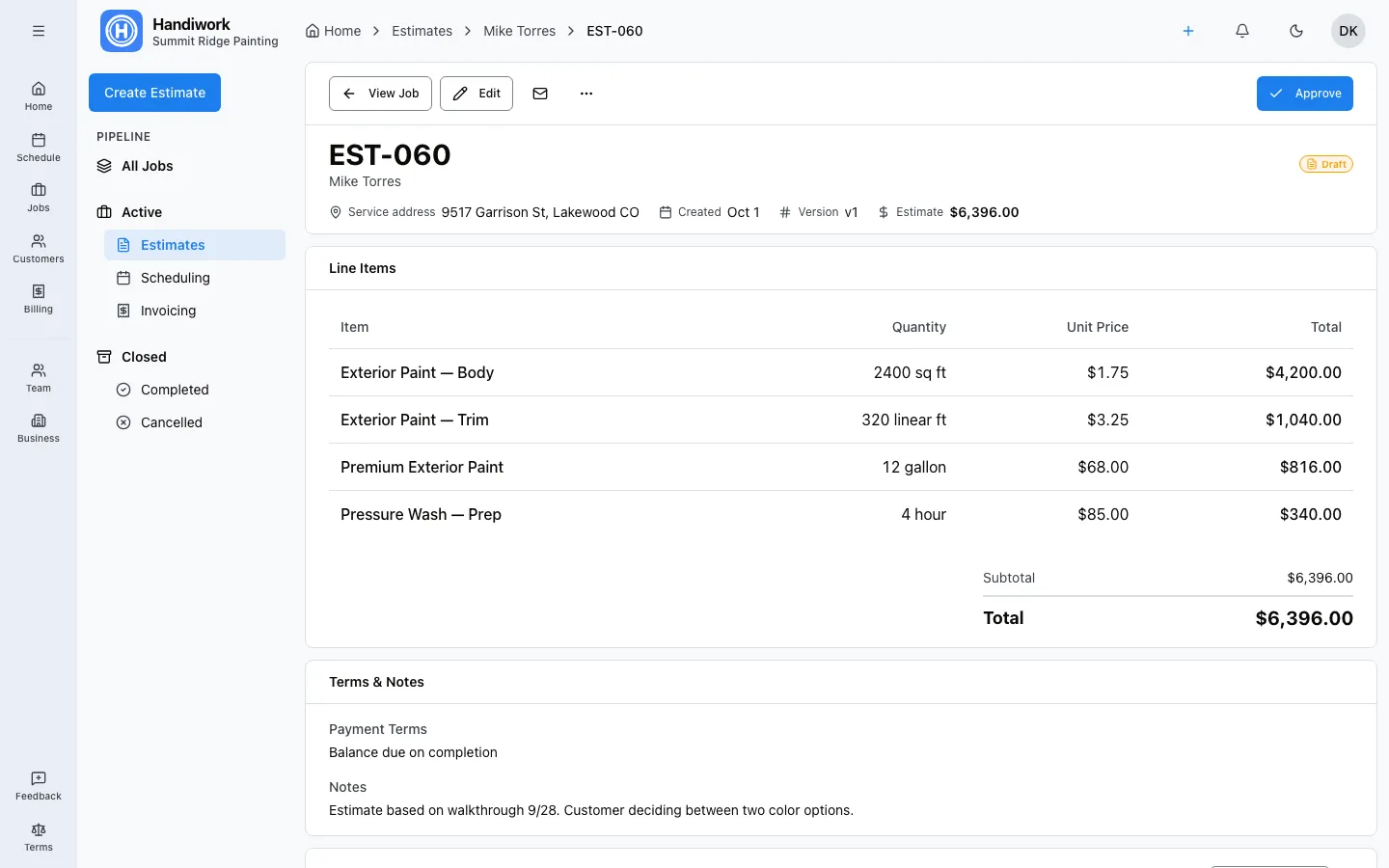
Price walls and ceilings by the square foot, trim by the linear foot, prep by the hour and paint by the gallon. Email the estimate before you leave the driveway.
Scheduling & Calendar
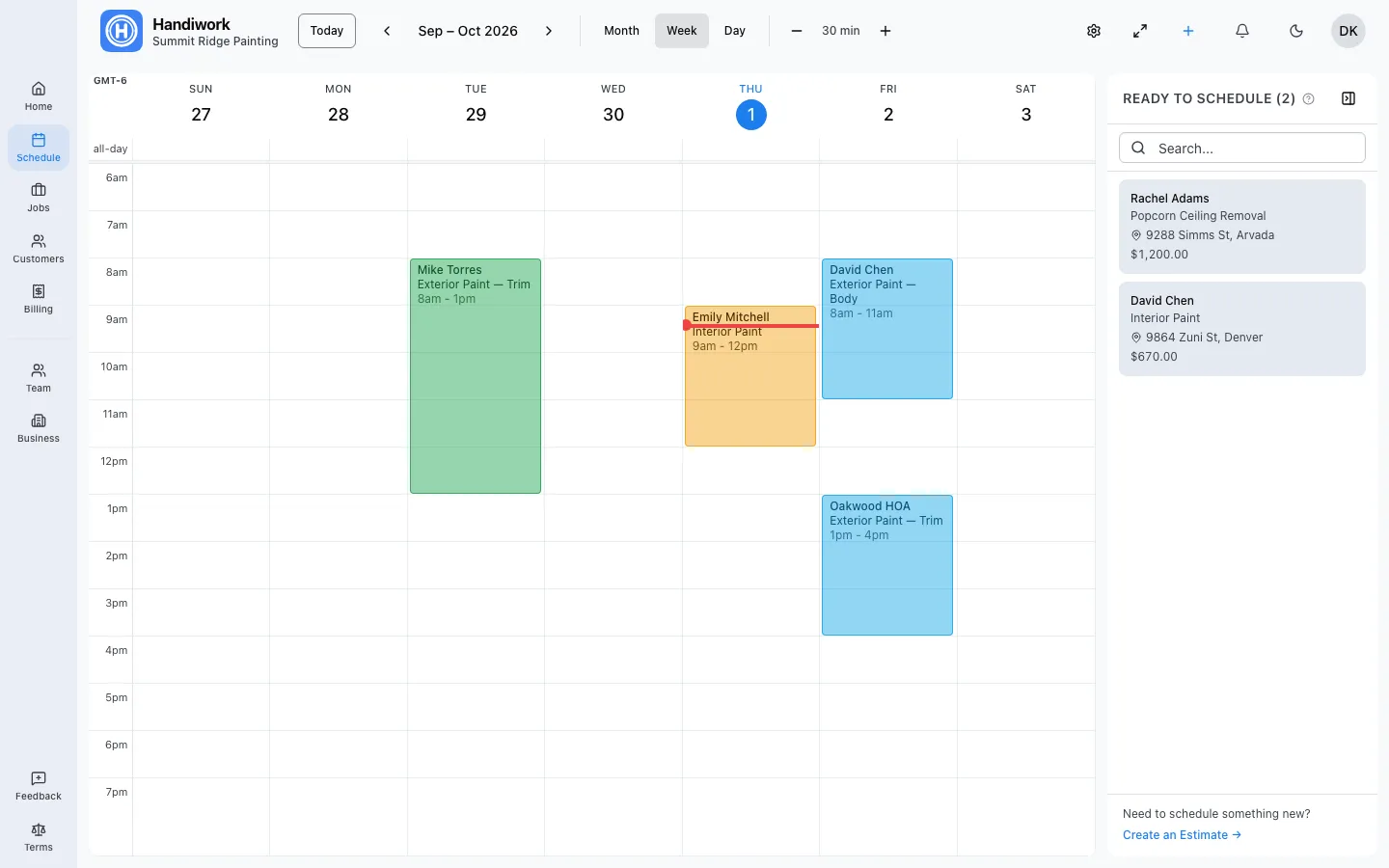
Book a four-day exterior as one job on the drag-and-drop calendar. Homeowners get an email when it's booked and another if you move it for weather.
Job Photos
Take photos on your phone at the walkthrough and through the job, with a caption on each, and keep them on the job for good.
Professional Invoicing
Build the final invoice from the approved estimate, line for line, with discounts and tax worked out for you.
Online Payments
Every invoice carries a pay-now link. The homeowner pays by card or bank transfer through Stripe, on their own phone.
Customer Management
Keep colors, sheens, gate codes and every past job on the customer's record, with notes you can add at any visit.
One Repaint, From the First Walkthrough to the Last Payment
Most painting jobs follow the same path. You walk the house with the homeowner and measure. You price the walls, ceilings, trim and prep, and wait for a yes. Then you buy the paint, book the crew, work around the weather, walk the finished rooms with the homeowner and collect. Handiwork follows that path with you, and every screen works on a phone, even with paint on your hands. You bid the repaint from the driveway and collect the final payment at the walkthrough.
Price It While You’re Standing in the Room
At the walkthrough, build the estimate on your phone while the measurements are fresh. Each line gets its own unit. Walls and ceilings go by the square foot, baseboard and door casings by the linear foot, patching and caulk by the hour, primer and finish coats by the gallon. Split the living room walls from its ceiling and the trim from the doors, so the homeowner can see what each part of the job costs and pick what to cut if the number is high. Add a discount when you’re matching another quote, set the tax rate, and Handiwork does the math.
As you type, Handiwork suggests line items you’ve entered before on that phone or computer, with the unit and price filled in. The tenth bedroom you price this month goes faster than the first.
Send the estimate by email before you back out of the driveway. The homeowner opens it on their phone. When they call or text to say go ahead, you mark it approved, and it becomes a job ready for the calendar. Nothing gets typed twice.
Photos From the First Visit On
Take photos at the walkthrough: the peeling fascia, the water stain on the ceiling, the cracked plaster by the stairs. Attach them to the estimate or the job and add a caption to each one. Keep shooting as the work goes. The siding after scraping, the patched drywall before primer, the finished room. When a homeowner asks what the trim looked like before you started, or a property manager wants proof the second coat went on, the pictures are on the job, next to the estimate and the invoice.
Crews and Jobs That Run for Days
A full exterior can take most of a week, and an interior repaint might run three days with a cabinet job squeezed in after. Book the exterior as one job from Monday to Thursday and it sits on the drag-and-drop calendar as one block. When the cabinets need to move to Friday, drag them there. Invite your crew lead onto the account with a login of their own, and they see the same calendar you do, so the Tuesday start isn’t news to anyone.
The homeowner gets an email when the job is booked. Handiwork sends a reminder the day before and another about two hours before the crew pulls up, so fewer mornings start with a locked gate and a homeowner at work.
When the Forecast Turns
Exterior work runs on the weather. Primer needs a dry surface, and every can lists the temperature and dry time the finish needs to cure. When three days of rain move in, drag the job to the next dry stretch. Handiwork emails the homeowner the new dates, and the reminders move with the job. You don’t spend the evening on the phone rearranging next week.
When the Homeowner Adds a Room
Halfway through the interior, the homeowner asks if you can do the upstairs hallway too. If they ask before approving the estimate, revise it and send the new version for a yes. If the crew is already working, add the hallway’s lines when you get to the final invoice: choose Edit on the invoice, add the new lines to the estimate, and re-issue the invoice with the new total. Every version of the estimate is saved. When the homeowner asks why the number went up, pull up the original next to the revised one and walk through the lines together.
The Final Walkthrough
Once the job is marked complete, one tap builds the invoice from the approved estimate, line for line. Walk the rooms with the homeowner, note the touch-ups, and send the invoice once you’re both happy. It goes out by email with a pay-now link, and the homeowner can pay by card or bank transfer from their own phone before you load the ladders. After a short hold, online payments are paid out to your bank when you request a payout. If they’d rather hand you a check, record it on the invoice and it’s marked paid.
Colors and Sheens for the Touch-Up Call
Write the colors and sheens on the customer’s record as you go: the hallway color, eggshell in the bedrooms, semi-gloss on the trim. Two years later, when the homeowner calls about a scuffed stairwell, you know which cans to bring before you get to the house. The touch-up gets its own small estimate and its own spot on the calendar, and every job you’ve done at that address is on the same record.
If you’re moving over from a spreadsheet or an old invoicing app, import your customer list from a CSV file, so repeat customers are already there when they call.
What It Costs
One painter or three crews, same deal: 3% of what you collect through Handiwork, capped at $79/month. There’s no subscription and no per-user fee, so adding a crew lead costs nothing. Stripe’s card processing fee applies on top, as it would with any provider. A slow winter month with no payments through Handiwork costs $0.
What Isn’t Built Yet
A few things painters ask about aren’t in Handiwork today:
- Deposits and progress billing. Each job gets one invoice for the full amount, so a deposit you take before buying materials is handled outside Handiwork for now.
- Crew assignments. Everyone on your account sees the whole calendar. You can’t yet put a named painter on a job.
- Lead-safe (RRP) records. There’s no checklist or recordkeeping for pre-1978 homes. Keep those records the way you do today.
- An installed app. Handiwork runs in your phone’s browser, with nothing to download.
Still Paying Per Lead?
Lead marketplaces charge you before you ever get the job, win or lose. Handiwork works with the customers you already have.
A repaint is a big-ticket job, and lead marketplaces commonly charge more for high-ticket trades like painting, before you've even given the homeowner a quote.
| Model | How you're charged | If the job doesn't close | Monthly cost |
|---|---|---|---|
| Lead marketplaces (Angi, Thumbtack) | Commonly reported $15–$100+ per shared lead (often higher for high-ticket trades), with the same lead sold to several pros at once | You still pay. The fee isn't refunded if you don't win the job. | Scales with how many leads you buy |
| Handiwork | $0 to find work. Handiwork doesn't sell leads. It runs the customers you already have. | Nothing to lose, because there's no lead fee | 3% per payment, capped at $79/mo. $0 until you get paid. |
Lead marketplaces don't publish per-lead rates; figures above reflect commonly reported ranges from contractor forums and industry coverage, not a vendor's own rate card, and vary by trade, market, and bidding activity. Handiwork doesn't sell or resell leads. It handles invoicing, scheduling and payments for the jobs you already have.
You already have customers. A lead marketplace charges you to meet a stranger who might hire someone else. Handiwork charges nothing to run the business you've already built.
Send your next bid from Handiwork
Free until a customer pays you. Then 3% of what you collect, capped at $79/month.
Get Started FreeHandiwork for Other Trades
Painting is where we started. The same estimates and invoices work for these trades too.